Bisque vs. Single-Fire: A Practical Comparison for Studio Potters
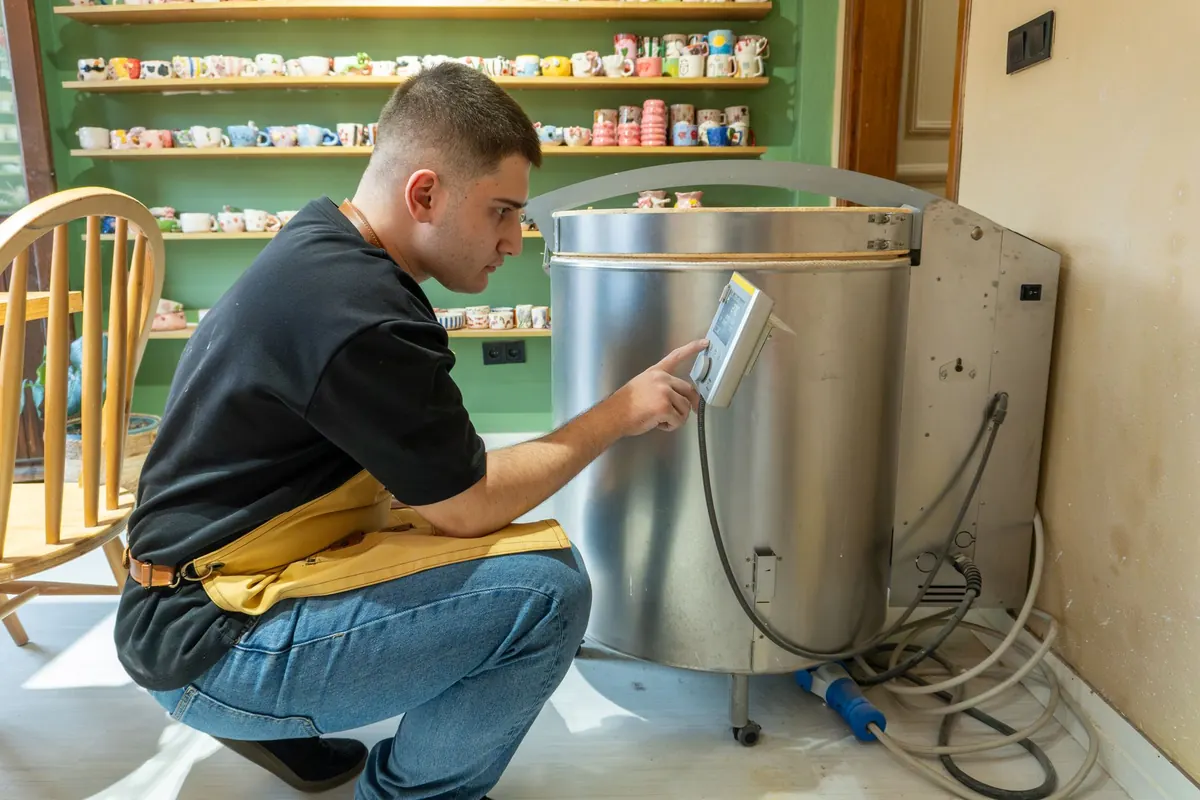
Bisque firing is the standard rhythm in most studios: shape the piece, let it dry, fire it once to make handling safe, glaze it, fire again. Single firing collapses that rhythm into one trip through the kiln, with glaze applied to raw clay. Both are old, both are legitimate, and neither is automatically better. What changes is how you work, what can go wrong, and what kinds of surfaces and forms you can reasonably expect. The useful question is not which method is "correct" but which one fits the piece in front of you and the studio you actually have.
What Each Method Actually Involves
Bisque firing brings clay to roughly cone 06 to cone 04, hot enough that chemically bound water leaves and the clay converts into a ceramic material, but cool enough that the body stays porous. That porosity is the point: glaze applied to bisqueware sticks to a stable surface, and the water in the glaze slurry is drawn into the clay so the layer sets. The piece can also be sanded, wiped, and handled without crumbling.
Single firing, sometimes called once-firing or raw glazing, skips that step. Glaze goes onto leather-hard or bone-dry clay, and the kiln fires the whole thing in one go, usually to the final temperature. Because the glaze must survive the clay's shrinkage and its release of water and gases, the process demands more from both materials and the person applying them.
There is a middle path worth knowing: firing raw-glazed work slowly in a kiln with a long, gentle early ramp, and candling overnight if the work is thick. Much of the single-firing tradition is not really about skipping a firing but about controlling the first few hundred degrees.
Workflow and Studio Logistics
The workflow difference is larger than it looks on paper. Double firing spreads the work across two cycles with a long gap for glazing and, if needed, glaze corrections. That gap is forgiving. A piece that comes out of the bisque with a small flaw can be sanded, filled, or set aside. Glaze that crawls or looks wrong can be adjusted before the final firing, though not after.
Single firing compresses the timeline and the decision-making. Everything must be resolved before the kiln is loaded: the form, the surface, the glaze thickness, the placement of wads or stilts, and the firing schedule. The reward is fewer kiln hours, less energy, and one less opportunity to chip a rim while moving pots around.
Kiln space matters too. Bisqueware can be stacked and nested fairly aggressively because the clay is strong and glaze is not yet involved. Glazed work needs clearance between pieces and from elements, so a single-fired load is often less dense than a bisque load. Whether that is a gain or a loss depends on the size of your kiln and how often you fire.
A quick workflow comparison
- Bisque then glaze: dry, bisque, cool, glaze, glaze fire. Two kiln cycles, more handling, more chances to correct mistakes.
- Single fire: dry, glaze, fire once. One kiln cycle, fewer handling steps, less room for correction.
- Drying time: bisque firing forgives slightly uneven drying more readily; raw glazing punishes it, because trapped moisture can cause a blowout in the kiln.
- Glaze decisions: deferred with bisque, front-loaded with single firing.
Risk: Where Things Go Wrong
Bisque firing absorbs risk in a useful way. Most catastrophic failures (cracking, exploding, warping) happen in the first firing, before glaze is on the pot. When a piece survives bisque, the final firing is comparatively predictable. The clay has already shrunk, the water is gone, and the glaze has a stable surface to bond with.
Single firing moves all of those risks to the same event as the glaze firing. Water trapped in thick or unevenly dried clay can turn to steam and crack or blow the piece apart, taking a shelf's worth of neighbors with it. Glaze applied too thickly onto raw clay can crawl, pinhole, or shiver because the clay is still releasing gases as the glaze begins to melt. Glaze applied too thinly can look dry and starved.
There are practical ways to reduce the risk:
- Dry the work thoroughly, and be honest about thickness. Thick bases, joined handles, and sculptural masses need much longer than a thin-walled bowl.
- Fire slowly through the first few hundred degrees. A long candling period costs time but saves loads.
- Apply glaze in thinner coats, building up gradually rather than flooding the surface.
- Test on small pieces first. A single-fired cup teaches you more than a shelf of ambitious work.
- Keep detailed notes on glaze thickness, clay body, and firing schedule, since single firing leaves little room for guessing.
If you cannot describe the moisture content of a piece with confidence, it is not ready for a single firing.
Surface Results and Aesthetic Character
Bisque firing produces a stable, slightly chalky surface that accepts glaze evenly. Brush marks, spraying, and pouring all behave predictably. Glaze defects are easier to diagnose because most of the variables have already been settled. For potters aiming at controlled, repeatable surfaces, bisque firing is the more forgiving route.
Single firing can produce surfaces that double firing struggles to match. Glaze on raw clay sometimes integrates differently, with a softness at the edges and a liveliness where the glaze meets the body. Raw glazing also allows decorative techniques that depend on the clay still being soft, such as drawing into the glaze with a tool, layering slips and glazes together, or working with the clay's own texture under a thin glaze. Much of the historical stoneware tradition in Europe and Asia was raw-glazed, and the surfaces show it.
That said, single firing is not a shortcut to a particular look. It is a different process with its own rules. A well-bisqued and glazed pot can be just as beautiful, and a badly single-fired pot can be just as dull. Surface quality still comes down to glaze fit, thickness, and firing.
Which Projects Suit Which Method
Thin, even-walled domestic ware is where single firing shines. Cups, plates, small bowls, and simple forms dry quickly and evenly, and the reduced handling is a real advantage in a small studio. Potters who fire in a shared kiln often prefer it because it halves their use of shelf space and firing fees.
Bisque firing is the safer choice for:
- Thick or sculptural work with uneven mass
- Complex forms with joins, handles, or attachments
- Large pieces that are hard to move without damage
- Work involving multiple glaze layers, resists, or detailed decoration
- Any situation where you want a chance to correct before the final firing
Single firing suits:
- Simple, well-dried forms in a reliable clay body
- Production runs of similar small pieces
- Potters working with raw-glaze traditions and tested recipes
- Studios with limited kiln time but patient, careful work habits
Many potters use both, choosing per project rather than per studio. A maker might bisque complex teapots and single-fire cups, or bisque in winter when drying is slow and single-fire in summer.
Practical Advice Before You Commit
Start with one clay body and one glaze you trust. Single firing is not the place to discover that your clay and glaze have different shrinkage rates. Keep a notebook with the clay body, glaze name, glaze thickness, drying time, and firing schedule for every single-fired piece, and review it after each load.
If you are moving from bisque to single firing, do it gradually. Fire a few small pieces alongside a normal bisque load, then a small dedicated load. Learn how your glazes behave on raw clay, and do not assume that what worked on bisqueware will behave the same way. Adjust thickness downward, not upward, and give yourself room to be wrong.
Finally, be realistic about your kiln. Single firing asks more of the schedule, the shelves, and the person loading. If you cannot watch the early part of the firing or cannot afford a slow ramp, the energy savings may not be worth the risk. Bisque firing exists for good reasons, and the best studio practice is usually the one that matches your drying conditions, your kiln, and your patience.
Photo: Onur Burak Akın / Pexels