Raku Firing Safety Checklist: 10 Precautions Before You Open the Kiln
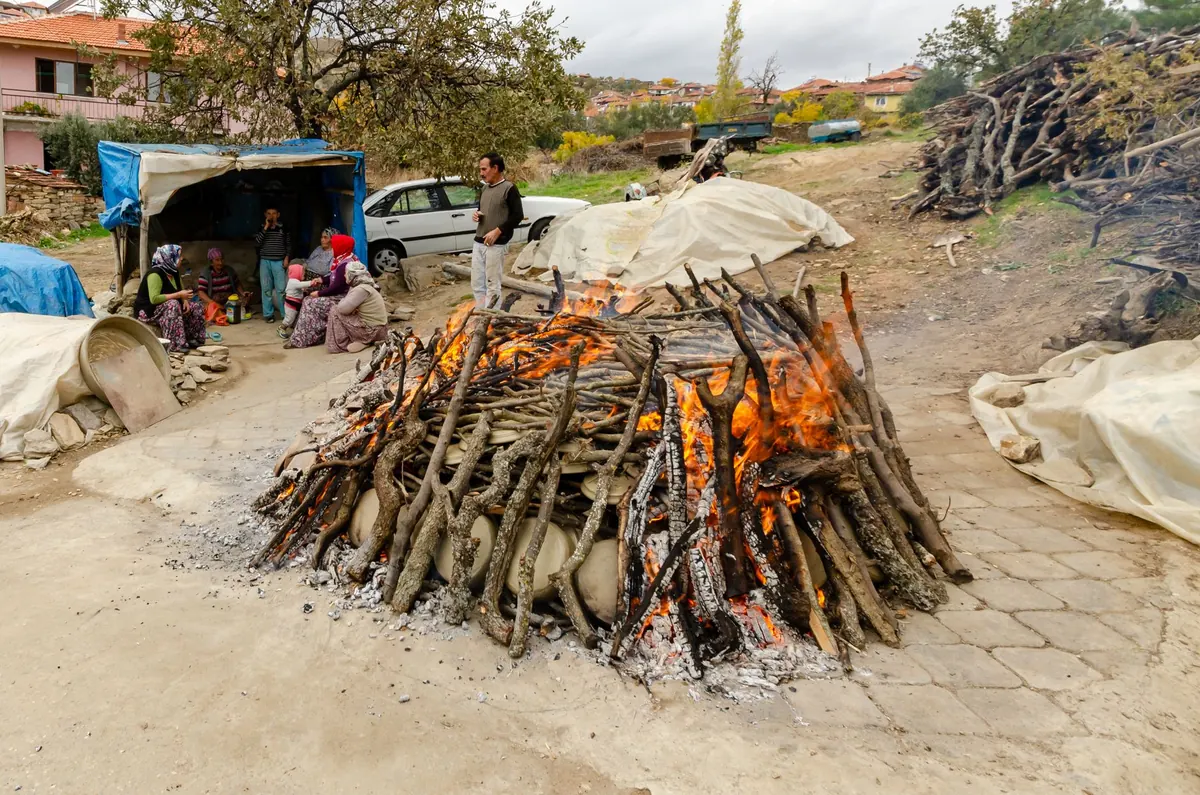
Raku is the only firing method where the most dangerous minutes come after the kiln has finished its work. The pieces emerge at around 1000°C, glowing orange, and within seconds you are carrying them across the yard into a bed of sawdust and closing a lid over the smoke. Every part of that sequence is deliberate. Every part of it can also go wrong quickly — not usually in a dramatic explosion, but in a singed forearm, a lungful of smoke, a bin lid that flashes when you lift it too early. What follows is the checklist worth running through before the first piece leaves the kiln.
Start With the Air, Not the Glaze
Ventilation decides how the whole session will feel by the end. If you can fire outdoors, do. An open yard with a light cross-breeze is the simplest, safest workspace you will ever have. If your kiln sits in a shed or under a lean-to, you need air moving through it in a way you can actually feel on your face, not just a gap under the roof that you assume is doing something.
Propane kilns produce carbon monoxide, and so does a bin full of smouldering sawdust. Both are odourless in the case of CO, which means your nose is not a reliable instrument. A domestic extractor fan is not the answer either; it can pull fumes across the room before it clears them. Work upwind of the kiln and the reduction bin, and check the wind direction again an hour later — it shifts, and the smoke follows it.
One more thing worth saying plainly: if you feel headachy, dizzy, or sick during a firing, stop, get into fresh air, and do not go back in to "just finish this batch." Symptoms that persist deserve a conversation with a medical professional rather than a guess.
Dress for Heat, Not for a Photograph
Natural fibres or proper protective layers, never a synthetic jacket with a loose cuff. Polyester melts onto skin; cotton and wool, at worst, singe. The gear that matters most is the gear covering the forearms and the face, because that is where the heat actually reaches when you lean in with tongs.
- Gauntlets that reach past the wrist to mid-forearm, in leather or aluminised fabric. Oven mitts are too short and too clumsy.
- A face shield over safety glasses. Sparks and fine ash travel further than you expect when a lid comes off.
- A leather apron if you are handling pieces at temperature, and boots rather than trainers with exposed laces.
- Hair tied back, sleeves rolled tight or buttoned, no dangling jewellery, and a proper respirator cartridge for smoke if you are working close to the reduction bin for a long session.
A dust mask is fine for mixing glazes. It is not fine for standing over burning sawdust.
Kiln Handling: Plan the Route Before You Lift
Most kiln accidents happen in the four seconds between the piece leaving the kiln and reaching the bin. Clear the path first. Move the bucket, the hose, the stray shelf, the dog bowl. Know exactly where the piece is going before your tongs close on it.
Use tongs with jaws long enough that your hands stay outside the radiant heat, and test the grip on a cold piece of similar shape first — a bottle form that slips at 900°C is not something you want to discover mid-carry. Open the kiln lid in stages and stand to one side rather than leaning over the opening; the first rush of heat is the strongest. If a piece is large or awkward, use two people with a clear count, or a purpose-built cradle, and never carry something hot across a wet or uneven surface.
Build the Reduction Station Before Anything Glows
Set up the bin while you are still calm and nothing is at temperature. A lidded metal bin, dry sawdust or shredded paper inside, sitting on bare earth or concrete well away from fences, sheds, dry grass, and overhanging branches. Wet down the ground around it if the weather has been dry. Keep a hose or a bucket of water within reach and a fire extinguisher rated for the fuel you are using nearby — and know how to use it before you need it.
Resist the urge to add extra accelerant. A generous handful of fine, dry material smoulders steadily; a splash of solvent produces a flash that removes eyebrows. Lift the lid with the opening pointing away from your body and your face turned aside, and keep the bin closed long enough for the smoke to be doing its work rather than escaping into your breathing space.
The Smoke You Cannot See
Post-fire reduction is where the quiet risks live. A closed bin of smouldering material keeps producing carbon monoxide for a long time after the flames have gone. Do not carry a still-warm bin into a garage, a studio, or a car. Leave it outdoors until it is genuinely cold, and never lean your head over the opening to see how the glaze is turning out.
If you can smell smoke, you are already standing in it — move upwind before you look at anything.
Quenching carries its own hazards. Use a sturdy metal container, not glass or a thin plastic tub, and set it on flat ground at a sensible distance from the kiln and any electrics. A hot piece hitting water can crack and throw shards and steam. Stand back, keep the tongs holding the piece, and let the water settle before you reach in.
Quenching, Thermal Shock, and the People Watching
Raku attracts an audience, and that is part of the pleasure — but spectators need a line they do not cross. Set it back from the kiln and the bin, well outside the smoke plume, and be prepared to say it twice. Children and pets should be indoors or behind a fence for the duration; a curious dog and a bucket of hot water are a bad combination.
Tell your neighbours, especially on the first firing in a new place. A wall of smoke and a smell of burning wood invites a phone call to the fire service, and a hose-down of the site plus a friendly warning beforehand saves everyone an awkward afternoon. Keep the firing area tidy as you go: hot shards, spilled sawdust, and cooling pieces underfoot are exactly what turns a good session into a trip to the clinic.
The Two-Minute Walkthrough Before You Light
Read this once out loud at the start of a firing day and the habit will stick. It takes less time than loading a single shelf, and it is the difference between a craft and a gamble.
- Air moving through the workspace, and me standing upwind.
- Gauntlets, face shield, glasses, natural fibres, hair tied back.
- Clear route from kiln to bin, with nothing to trip over.
- Bin on bare ground, lid fitted, extinguisher and water ready.
- Spectators behind the line; neighbours know what the smoke is.
- Phone within reach and hands free to use it.
Then light up, work slowly, and let the smoke do what you set it up to do. The best raku results come from a firing you were never fighting.
Photo: Deniz ŞENGÜL / Pexels